
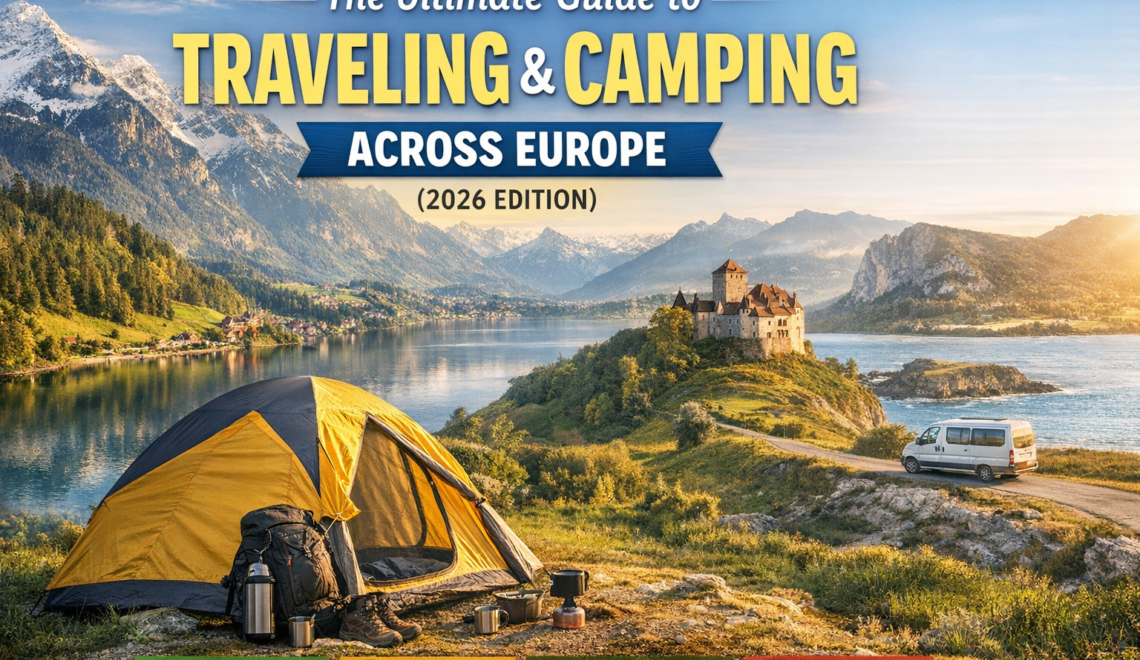
The Ultimate Guide to Traveling and Camping Across Europe (2026 Edition)
Europe is one of the few places in the world where you can wake up in the Alps, camp by a lake in Slovenia, and sleep near a beach in Portugal — all in one trip.
From wild mountains to coastal roads, Europe is a dream destination for travelers who love freedom, nature, and adventure.
This guide will show you how to travel Europe and camp legally, safely, and affordably, even if it’s your first time.
Why Europe Is Perfect for Camping Travelers
Camping in Europe is not just about saving money — it’s about experiencing nature the European way.
Benefits of Camping in Europe
- Thousands of well-maintained campsites
- Easy travel between countries (Schengen zone)
- Safe roads and public transport
- Diverse landscapes within short distances
- Facilities like showers, kitchens, and Wi-Fi at many camps
Best Countries for Camping in Europe
1. Switzerland – Alpine Dreams
Camp near crystal-clear lakes and snow-capped peaks. Perfect for hiking, photography, and quiet escapes.
Best spots: Interlaken, Zermatt, Lake Lucerne
2. Norway – Wild & Free
Thanks to the “Right to Roam” law, you can camp almost anywhere in nature (with respect).
Best spots: Lofoten Islands, Geirangerfjord, Trolltunga
3. France – From Mountains to Beaches
France offers affordable campsites and stunning routes like the French Alps and Atlantic coast.
Best spots: Chamonix, Provence, Brittany
4. Italy – History + Nature
Wake up near vineyards, lakes, or coastal cliffs while exploring historic towns.
Best spots: Lake Como, Dolomites, Tuscany
5. Scotland – Misty Highlands
Scotland allows responsible wild camping and offers epic landscapes straight out of movies.
Best spots: Isle of Skye, Glencoe, Cairngorms
Wild Camping vs Campsites in Europe
Wild Camping
Allowed in:
- Norway
- Sweden
- Finland
- Scotland
- Parts of Estonia
❗Always check local rules — many countries ban wild camping.
Campsites
Most European campsites include:
- Hot showers
- Electricity
- Toilets
- Cooking areas
- Laundry rooms
Average price: €10–€25 per night
Best Time to Travel and Camp in Europe
| Season | Best For |
|---|---|
| Spring (Apr–Jun) | Flowers, mild weather, fewer crowds |
| Summer (Jul–Aug) | Festivals, long days, warm nights |
| Autumn (Sep–Oct) | Colors, cheap travel, calm camps |
| Winter (Nov–Mar) | Vanlife, snow camping, northern lights |
What You Need for Camping in Europe
Essential Gear
- Lightweight tent or campervan
- Sleeping bag (3–4 season)
- Power bank or solar charger
- Camping stove
- Travel adapter
- Waterproof clothing
Budget Tips for Europe Camping Travel
- Use camping apps (Park4Night, iOverlander)
- Buy food from local supermarkets
- Travel by train + bike for short distances
- Camp outside big cities
- Travel in shoulder seasons
Can You Camp in Europe Without a Car?
Yes! Many travelers:
- Use trains + buses
- Rent bikes
- Stay at campsites near cities
- Use hostels + camping combo trips
Safety Tips for Camping in Europe
- Avoid private land unless allowed
- Leave no trace
- Keep food sealed
- Check weather daily
- Respect quiet hours at campsites
Final Thoughts: Europe Is Made for Campers
Whether you love mountains, forests, beaches, or history — Europe offers it all within a few hours of travel. Camping lets you slow down, connect with nature, and travel Europe without spending a fortune.
If freedom is your goal, camping is the best way to explore Europe.